Practical Use of Riblet Technology to passenger aircraft
Technical Challenges in the Practical Use of the Riblet
Reducing fuel consumption has not only great economic value for the aviation industry, but also it makes a significant contribution to society by reducing CO2 emissions. Skin friction drag accounts for 40% of total aerodynamic drag for the passenger aircraft, therefore one of the most efficient ways to reduce the aerodynamic drag is to reduce the skin friction drag.
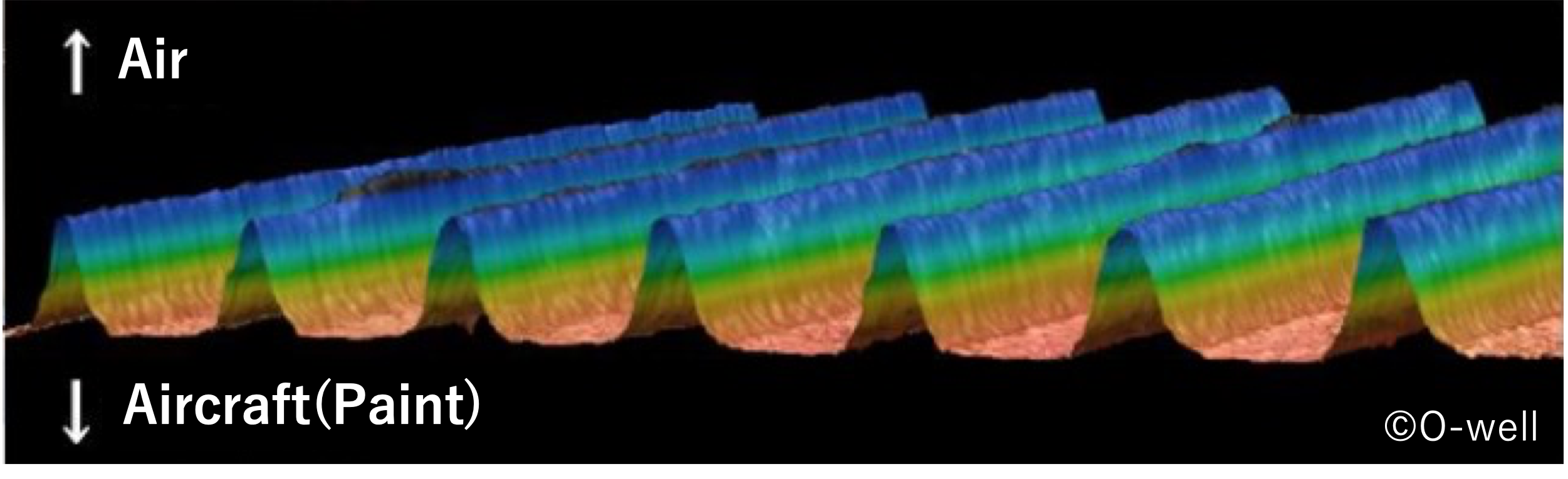
Riblet is a technology inspired by the fine grooves on the scales of fast-swimming sharks. The riblet reduces the skin friction drag by grooves with approximately 0.1mm wide on the surface of passenger aircraft, enabling fuel consumption reduction and CO2 emissions reduction. However, not only aerodynamic performance but also durability in flights and rapid installation are technical challenges to put the riblet into practical use on the passenger aircraft. Specifically, the challenges are aerodynamic design technology that takes into account aircraft operating conditions, durability to maintain performance over a long period of time, and technology that allows installation over large areas in a short period of time.
Riblet Technology Reduces CO2 Emissions on Passenger Aircraft
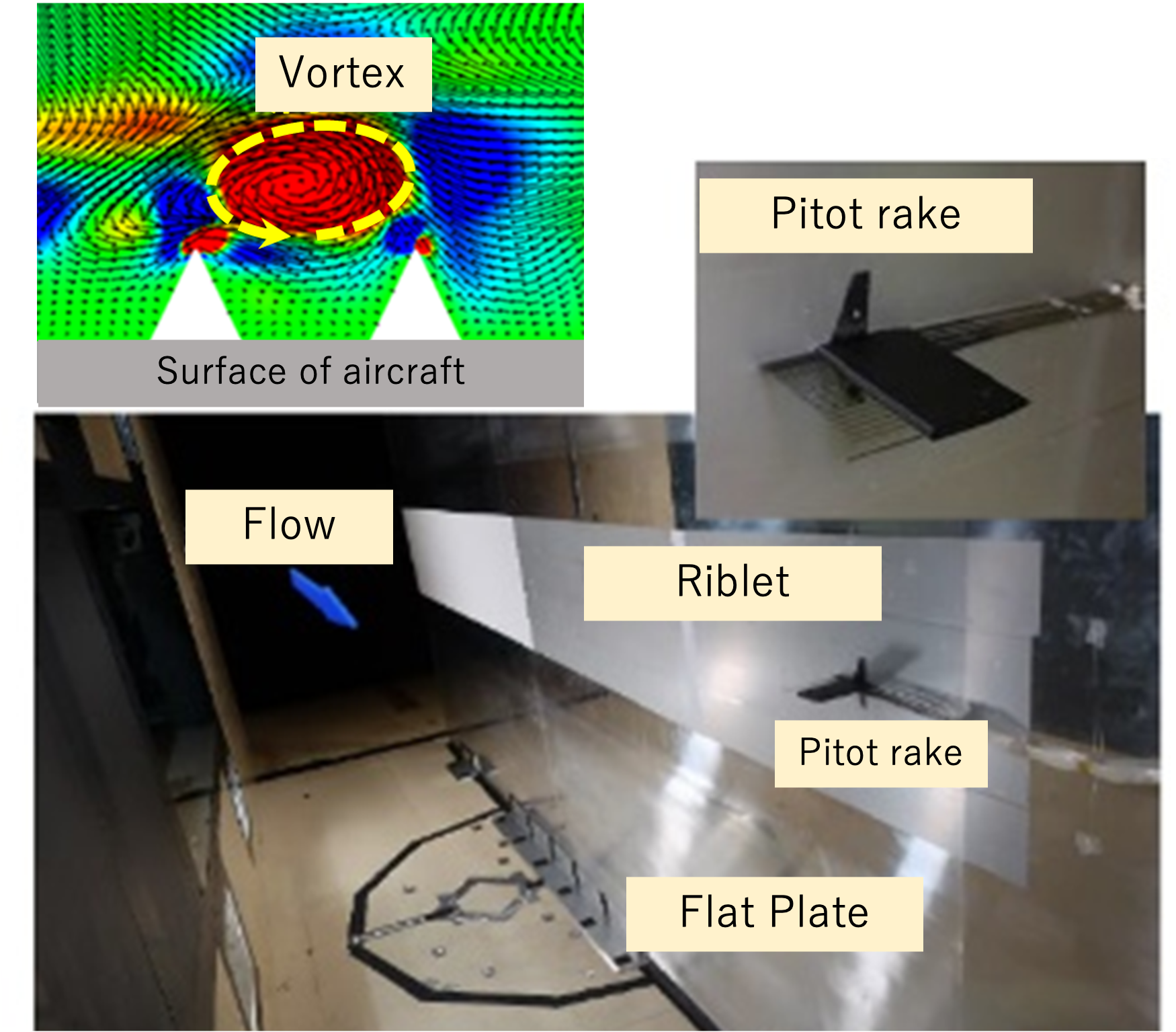
JAXA has advanced numerical analysis and wind tunnel testing to research and develop high-performance riblet, and has worked with JAPAN AIRLINES and O-WELL to develop technology to form aircraft paint into a riblet shape.
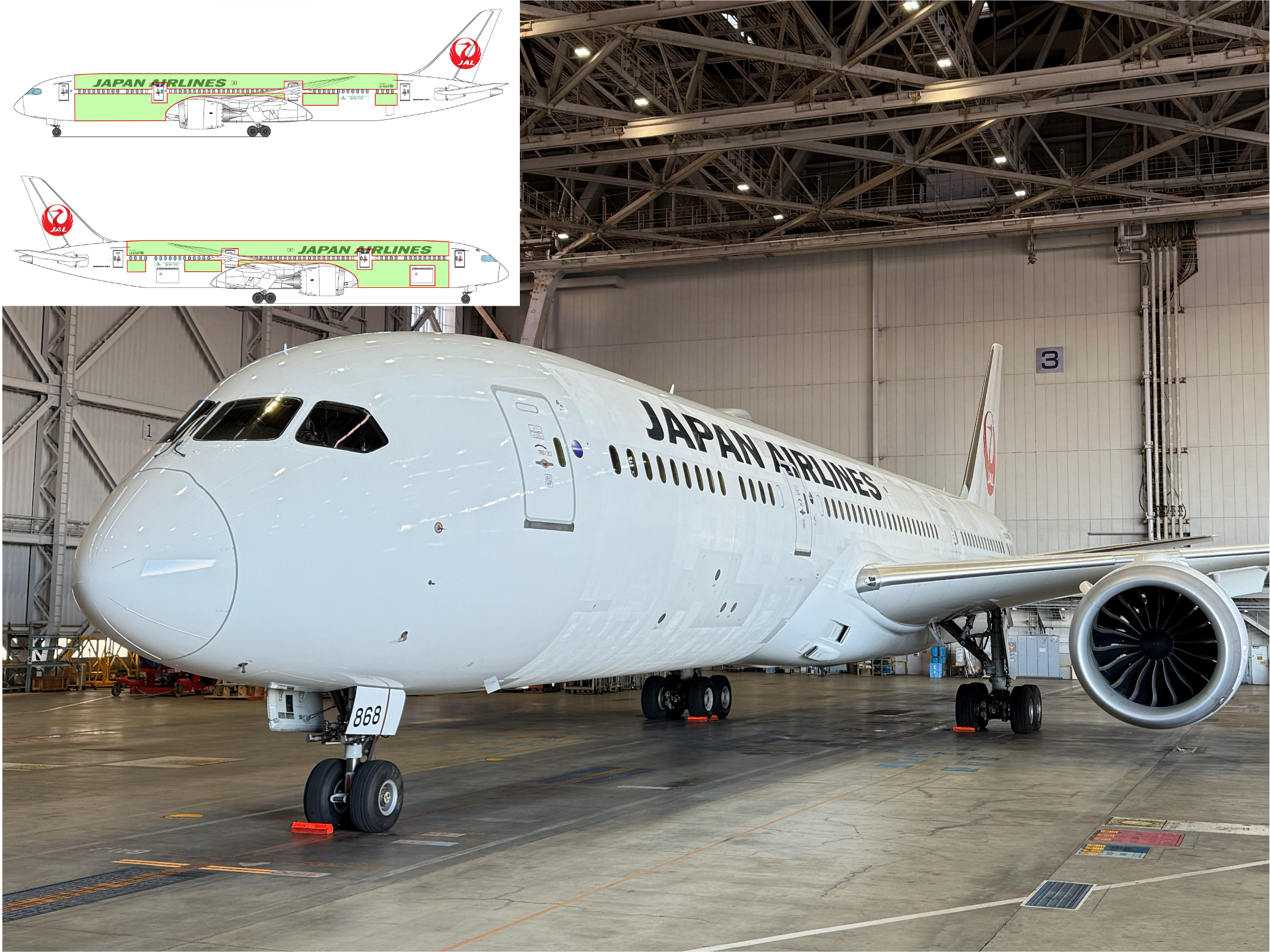
In 2022, a small area of riblet was installed on the fuselage of JAL Boeing 737-800 and flight to confirm durability of the riblet. In 2023, the large area of riblet installation was success on the fuselage. In 2025, the world's first international passenger aircraft (JAL Boeing787-9) began flying with the riblet applied to approximately 30% of the fuselage. The drag reduction is about 0.24%. It is expected 119 tons of fuel consumption and 381 tons of CO2 emissions per aircraft per year. If riblets are applied to more than 25,000 passenger aircraft worldwide in the future, it will be expected that huge fuel and CO2 reductions will be achieved.
-
Affordable and Clean Energy: Reducing aerodynamic drag of passenger aircraft leads improvement of energy efficiency.

-
Industry, Innovation and Infrastructure:Improvement of fuel efficiency leads efficient resource use.

-
Responsible Consumption and Production:Reducing aircraft drag of passenger aircraft leads efficient use of natural resources.

-
Take urgent action to combat climate change and its impacts: Reducing aerodynamic drag of passenger aircraft leads reducing of CO2 emissions by improving fuel efficiency.